

Ready to trade your office chair for a paddle and conquer roaring rivers? Whitewater rafting trips inject pure adrenaline into every bend and rapid. Whether you’re chasing that heart-pounding Class IV drop or craving a family-friendly float, whitewater rafting is the ultimate way to connect with nature—and yourself.
Why You’ll Love Whitewater Rafting Trips
Imagine standing on the riverbank, paddle in hand, eyes locked on churning water. One minute you’re calm, soaking in alpine peaks or lush canyon walls. The next, you’re hurtling through a standing wave, spray flying, heart racing. That surge of excitement—it’s addictive.
- Adrenaline & Endorphins: Every rapid triggers a rush that leaves you buzzing for hours.
- Teamwork & Trust: Sync your strokes, call out commands, celebrate every successful run together.
- Scenic Escape: Hidden gorges, emerald forests, wildlife sightings—you’re off the beaten path.
- All Skill Levels: From mellow Class I introductions to expert-only Class V challenges, there’s a perfect trip for you.
Top Whitewater Rafting Destinations Worldwide
Some of the best places to go white water rafting are all in the Americas. Canada, Idaho and Ecuador feature, with other locations including Australia, Italy, Nepal and the Zambezi.
USA: Colorado & Grand Canyon
- Arkansas River, Colorado: Paddle the famed Royal Gorge for Class IV–V rapids framed by towering canyon walls.
- Brown’s Canyon, Colorado: Nestled among 14,000-foot peaks, this stretch offers thrilling waves with photo-op scenery.
- Colorado River, Grand Canyon: Combine epic rapids with jaw-dropping views of one of Earth’s natural wonders.
Canada: Ottawa & Kicking Horse
- Ottawa River, Ontario/Quebec: A powerhouse of consistent whitewater. Rapids range from playful Class III to expert Class V runs—perfect for repeat adventures.
- Kicking Horse River, British Columbia: Fed by glacier melt, this mountain river roars through rugged gorges. Expect Class III–IV surges and the occasional breath-stopping drop.
Italy: Noce & Dora Baltea
- Noce River, Trentino: Flowing through the Dolomites, the Noce balances adrenaline-charged rapids with stretches of calm reflective pools.
- Dora Baltea, Aosta Valley: Cradled by Alpine summits, this river delivers continuous Class II–III rapids ideal for welcoming newcomers and testing intermediates.
New Zealand: Kaituna, Tongariro, Shotover, Rangitata & Mohaka
- Kaituna River, Bay of Plenty Raft over the world’s highest commercially run waterfall (7 m) on this Grade 5 juggernaut. Between rainforest canyons and exhilarating rapids, it’s a whitewater rafting trip you’ll never forget.
- Tongariro River, Turangi Flowing from the slopes of Tongariro National Park into Lake Taupo, this river offers 60 rapids spanning Class II–IV. Expect volcanic cliffs, rare blue duck sightings, and guides who know every eddy like the back of their paddle.
- Shotover River, Queenstown Carve through Skippers Canyon on Class III–IV rapids, then plunge into darkness as you rocket through the Oxenbridge Tunnel. It’s epic, technical, and set against the dramatic Southern Alps.
- Rangitata Gorge, Canterbury Tackle guaranteed Class V runs through narrow gorges and bulging waves. Hidden Valleys Rafting gives expert paddlers exclusive access to some of the fiercest rapids on the South Island.
- Mohaka River, Hawke’s Bay Slide through fossil-lined canyons and spring-fed walls with rapids ranging from Class II family floats to Class V adrenaline blasts. Multi-day trips camp riverside under the stars.
UK
- Holme Pierrepoint at the National Watersports Centre in Nottingham
- Canolfan Tryweryn, the National Whitewater based near Bala, North Wales
- Whitewater Active. JJ Canoeing and Rafting is one of the Uk’s leading White Water Rafting and Canoeing Centre based in Llangollen, in North Wales.
- Lee Valley, near London. This is the London 2012 Olympic whitewater rafting venue. One of the cool things about this venue is that it has a lift to take your raft back up to the top. No carrying it all the way back up the river!
What to Expect on Whitewater Rafting Trips

Video of whitewater rafting in New Zealand
- Expert Guides & Top-Tier Gear Safety is non-negotiable. Our international team of certified guides leads every excursion, backed by U.S. Coast Guard–approved rafts, helmets, and personal flotation devices.
- River Class Breakdown
- Class I–II: Gentle rapids, ideal for families and first-timers.
- Class III: Moderate waves, perfect for intermediate paddlers.
- Class IV–V: Technical drops, narrow canyons—seek these if you crave serious thrills.
- Flexible Trip Lengths Half-day bursts for a quick fix, full-day adventures with picnic breaks, or multi-day expeditions that camp beside the river under starlit skies.
River Types
Whitewater rafting is an exhilarating way to go down a river. There are three types of river that you can go rafting on. These are:
- a man-made whitewater river, like the London 2012 Olympic whitewater river at Lee Valley. This river is controlled and is used for canoeing competitions. A man-made river is ideal for spectators to see the entire stretch of water.
- Dam release rivers such as Canolfan Tryweryn – The National Whitewater Centre in Bala, Wales. Dam release rivers use the periodical release from dams to create the whitewater. The advantage of this type of river is that you can use it for whitewater rafting when other rivers have dried up during hot weather.
- A natural river such as the River Dee or Colorado. This whitewater river is not dependant on Dam releases as other Welsh venues are, which makes us truly the only year round White Water Rafting in Wales.

What Happens on the Day
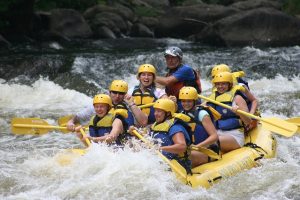
When you go whitewater rafting the team looking after you are great. They will provide you with an unforgettable whitewater rafting experience. Starting with getting kitted out with a wetsuit, buoancy aid and helmet, you get full instructions on how to behave whilst still on dry land. They will tell you what to do if you fall out, how to get back into the raft, and at all costs don’t let go of your paddle.
With paddle in one hand and helping to carry the raft in the other hand, you set off onto a calm piece of water at the head of the river. Then you all head off over the first weir. The advantage of the manmade river is that the instructor will guide the team in the raft to the calm eddies at the side of each weir to brief them on how to tackle the next weir. The instructor explains what to do and then you experience how the raft behaves as you cross from one side of the water to the other. If you should happen to fall out, all you do is just lay back and float. The remainder of your team in the raft have to paddle to reach you and then pull you into the raft. The downside of the manmade river is that it is short compared with a natural river, and when you reach the bottom you all have to get out and carry the raft back to the head of the river for another whitewater run. If you are on a natural river, you just go down once, but the distance is much further.
Tips to Maximise Your Whitewater Rafting Trips
- Book peak river season (late spring to early autumn) for optimal water flow.
- Dress in quick-dry layers and water shoes—temperatures can swing between sunlit decks and splash-soaked seats.
- Pack a waterproof camera or secure it in a dry bag to capture epic moments.
- Don’t skip the safety briefing; that quick paddle drill could be your key to staying upright during a big rapid.
Your Next Step: Book a Whitewater Rafting Trip Today
If you’ve been daydreaming about feeling that river roar beneath your raft, now’s your moment. Our whitewater rafting trips book out fast in top destinations like Colorado, British Columbia, and the Italian Alps. Hit the water, conquer those rapids, and create stories you’ll be telling for years.
Ready to sign up? Visit our booking page or give us a call—let’s plan the adventure that’ll get your pulse pounding and your spirit soaring.
If you prefer something a bit more sedate, you could always try raft building.